A RESPLENDENT MAHLER 3 FROM OTTO TAUSK AND THE VSO
Rihab Chaieb (mezzo-soprano), Women’s and Boys’ sections of the Vancouver Bach Choir, Vancouver Symphony Orchestra/ Otto Tausk (conductor): Mahler Symphony No. 3, Orpheum Theatre, May 30, 2026.
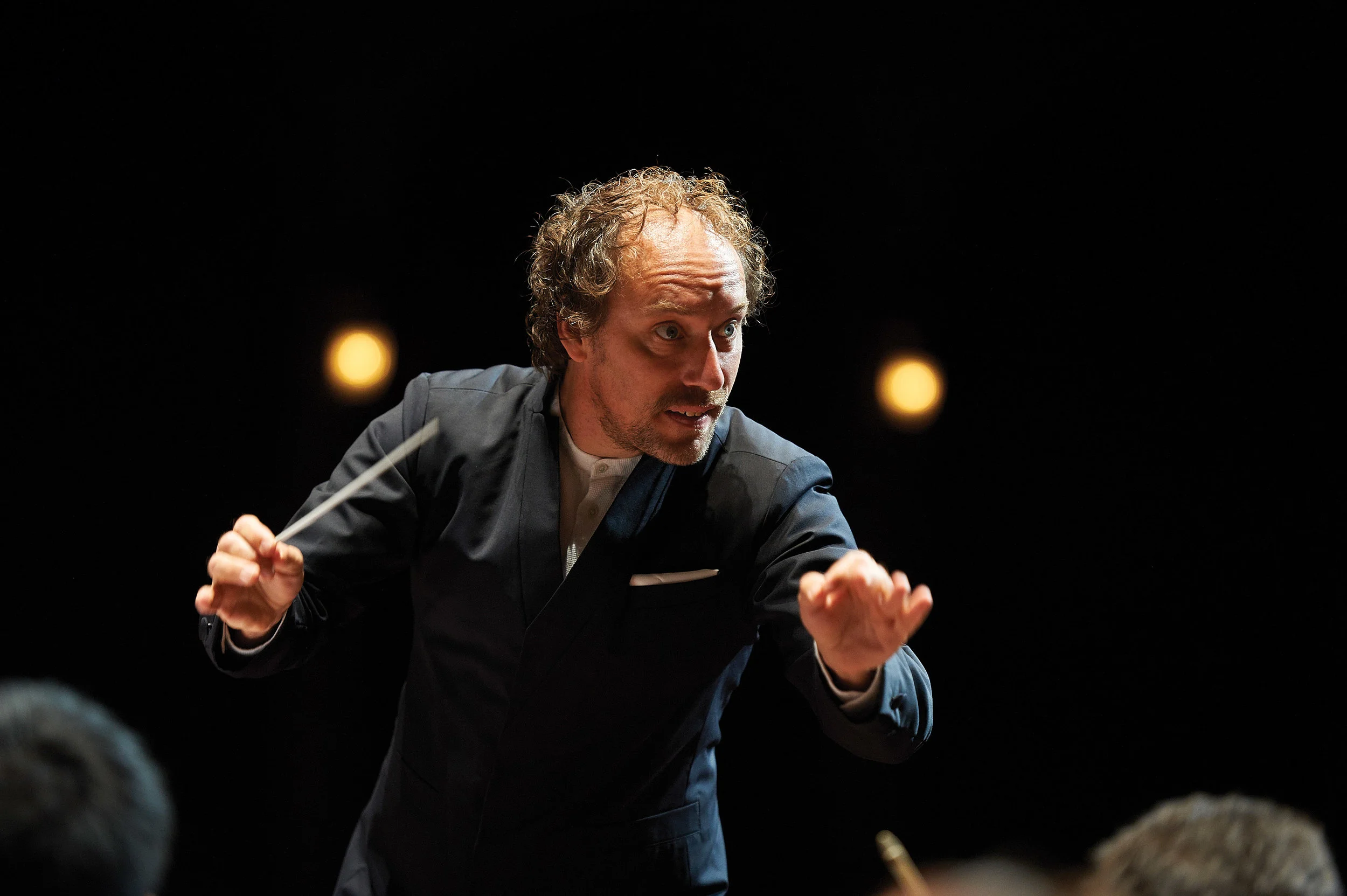
Otto Tausk has had a somewhat chequered history with Mahler. In previous attempts such as the First and Sixth symphonies, he tended to get some parts right, and others not, leaving only a partially satisfying whole. His pitfalls seemed to be threefold: a tendency to rush tempos; an incomplete absorption of Mahler’s lyrical style; and the habit of jumping at dramatic moments for emphasis without looking at the bigger picture. Fortunately, his current Mahler 3 was a vast step forward. Tausk kept his earlier tendencies in check and patiently let the music speak for itself, finding admirable coherence and cumulative strength over the whole. This was not a ‘spectacular’ performance of what is often regarded as a spectacular symphony, but one which brought both thought and sensitivity to the score and created a unerring sense of natural evolution and power. It was a reading that would have been warmly endorsed by his fellow Dutchman Bernard Haitink. The orchestra played extremely well, achieving fine balance and a very clear delineation of orchestral voices.
At close to 35 minutes, the opening movement of Symphony No. 3 is one of the supreme challenges in Mahler’s symphonies. Tausk conquered it by setting a moderate tempo that could allow its sequential postures to be integrated naturally. The opening on the brass was firmly and authoritatively anchored – neither ponderous nor overly histrionic – and allowed the subsequent naturalistic stillness to open out with space and atmosphere. The only item that was distracting was the too prominent projection of the pianissimo double bass in the transition about 2.5 minutes in: the emphasis was unnecessary. The following march sequences maintained the feeling of poise and direction, Tausk not obsessed as such with its dramatic Wunderhorn effects but still maintaining some of their ‘rough’ character: strong detailing and rhythmic certainty were always in evidence. The fact that the piece held nicely together right to the re-statement of the opening trombone theme was evidence of its concentration, and it carried on this way right to the mischievous fireworks at the end.
The relaxation and innocence at the opening of the Tempo di Menuetto was perfect, then gently moving to reveal strains of uncertainty and setting up the increased intensity later. The string lines possessed an idiomatic lyrical shape and a natural flexibility – and were very attentive too. The following Scherzo often mimicked the march sequences of the opening movement in character – firmly etched and cohesive, aware in counterpoint, but not pushing the hectoring, rough elements to the limit. The scurrying winds did well here. The offstage ‘posthorn’ solo that provides lyrical relief was also beautifully done, finding the right suspended, meditative quality.

The singing in the next two movements aimed at the right destination but it could not be regarded as more than acceptable. Mezzo Rihab Chaieb brought a clean precision to ‘O Mensch! Gib Acht!’ and achieved some degree of poignancy, but it lacked the weight and gravitas to conjure up the sacred, ancient feeling implied. The utterance must be haunting and elemental, and Chaieb only found glimmers of this; perhaps a contralto voice with a longer legato line and greater resonant bloom succeeds better. In the subsequent movement – which follows without pause – the women and boys of the Vancouver Bach Choir had plenty of fresh spirit, but were not always crisp enough. Depicting the entry into Wunderhorn heaven, ‘Es sungen drei Engel’ requires the singers to simulate church bells, so the attack must be sharp in consonants as well as bouncy and projective. While some passages achieved this, others seemed to lack dynamic balance as well as being too shaped in traditional choral style to leave a full imprint.
Fortunately, the slow finale was the crowning glory of this reading, bringing full spiritual resolution to the journey. Tausk rightly did not overload this closing movement: he kept it lean and intimate with particularly sensitive string playing. There are some that might be tempted to make it more fulsome, more Wagnerian in dramatic feeling, but that would seem to violate Mahler’s own quest for a ‘new music’ that avoided Wagnerian excesses. Here the scale and pacing of the conductor’s treatment drew one into a very personal world of pure feeling. The middle climax built inexorably, with horns and timpani resplendent, and the important transition to the close – where the lower strings dig in with greater volumes and elevate the music to a different plane – was admirably achieved. The degree of sadness, regret and subtle hope registered here are disarming. The magnificent ending had a lovely inevitability and patience. One felt a splendid spiritual catharsis as the timpani hammered out the finality of the verdict.
This was a very strong accomplishment, and Otto Tausk and the VSO should be proud of their efforts in this massive work. The quality of the playing was at a very high level, and I have seldom heard the orchestral texture so clear and the climaxes so unanimous. I think this performance touched everyone who attended, and it only confirms the adage that presenting this composer’s deeply felt ideas with consideration can penetrate the core significantly more than simply parading his spectacular moments.
© Geoffrey Newman 2026