A WONDERFUL HOMECOMING FOR IAN BOSTRIDGE AND WENWEN DU IN BRITTEN AND WOLF
Ian Bostridge (tenor). Wenwen Du (piano): Music of Hugo Wolf and Benjamin Britten, Playhouse, May 14. 2026.
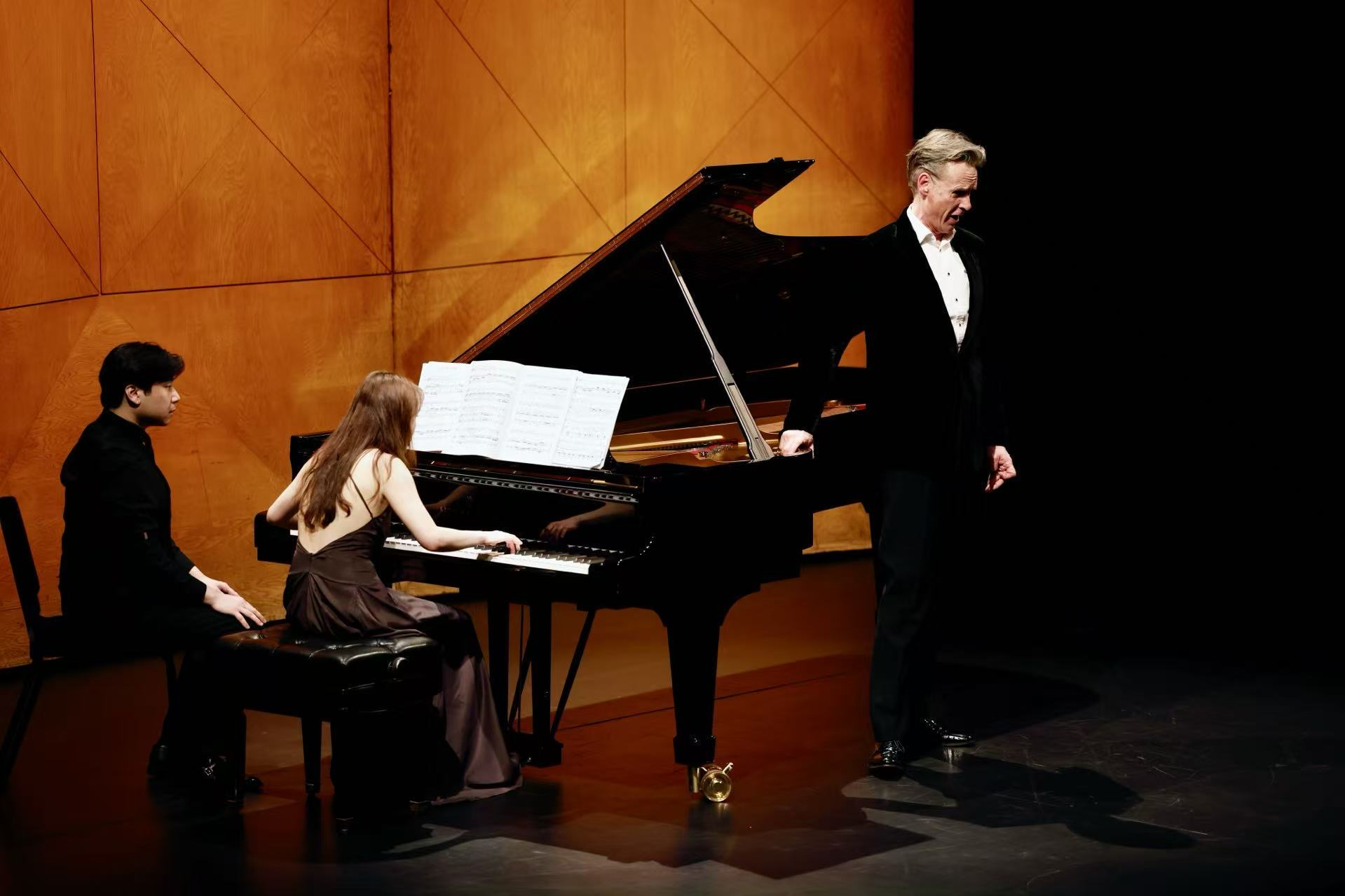
It has been a full decade since the Vancouver Recital Society sponsored two recitals featuring the celebrated British tenor Ian Bostridge and hometown pianist Wenwen Du (review, review). The current concert, sponsored by the recently-formed Nebula Concerts, paired six songs from Hugo Wolf’s Goethe Lieder with Britten’s Holy Sonnets of John Donne. It really felt like a homecoming – both artists were full of enthusiasm and engagement. Again, we witnessed supreme music making, with Du’s precise and knowing accompaniment providing a wonderful anchor for Bostridge’s vivid emotional immersion and vocal variety.
It goes without saying that the discerning, text-driven quality of Bostridge’s explorations remained fully in evidence here, but a more subtle change is that the centre of gravity of the tenor’s voice has now moved downward as he has matured. While maintaining enviable fluency throughout the spectrum, his interpretations now rely less on the sheer lightness and beauty of his top register and more equally on the weight and strength of a unified middle and bottom. There is a virtue in this: the baritone ranges are accommodated more easily and have a richer vocal hue, and his interpretations become weightier and more commanding as a consequence. It also makes his characteristic dramatic jumps between registers seem less extreme than previously.
In the Wolf songs, there could hardly be more refined, flowing lines than Bostridge found in the three Harfenspieler songs, exhibiting lovely lyrical expansion and control of dynamics. The sculpted paragraphing always distilled meaning from the melancholic texts and I was even a little surprised by the singer’s sheer power in opening out in the last song. Wenwen Du’s awareness of tonal weight and her precise articulation underpinned the experience, fully meeting the Graham Johnson standard of ‘never obtrusive but always present’.
The more epic Goethe settings were equally consuming. ‘Grenzen der Menschheit’ (Limitations of Mankind) had a wondrously-noble and universalist feel to it, with exceptional characterization. The stormy ‘Prometheus’ is the piece where the singer’s stronger lower register paid dividends. The tumultuous attack on the piano can sometimes block a lighter voice, but here balance was achieved, since Du was very careful about her dynamics while the voice cut the texture more decisively. The animation and paragraphing were beautifully wed, and the result was gripping. One might argue that Du could have been more Lisztian in the volcanic passages but her ‘objectivist’ approach with limited rubato and strong architecture actually worked well with the singer’s more subjective gyrations. The final song ‘Ganymed’ has been a long time favourite and one could only delight in Bostridge’s long knowing lines, and his sheer sensitivity and suspension to the end. This is a remarkably beautiful piece.
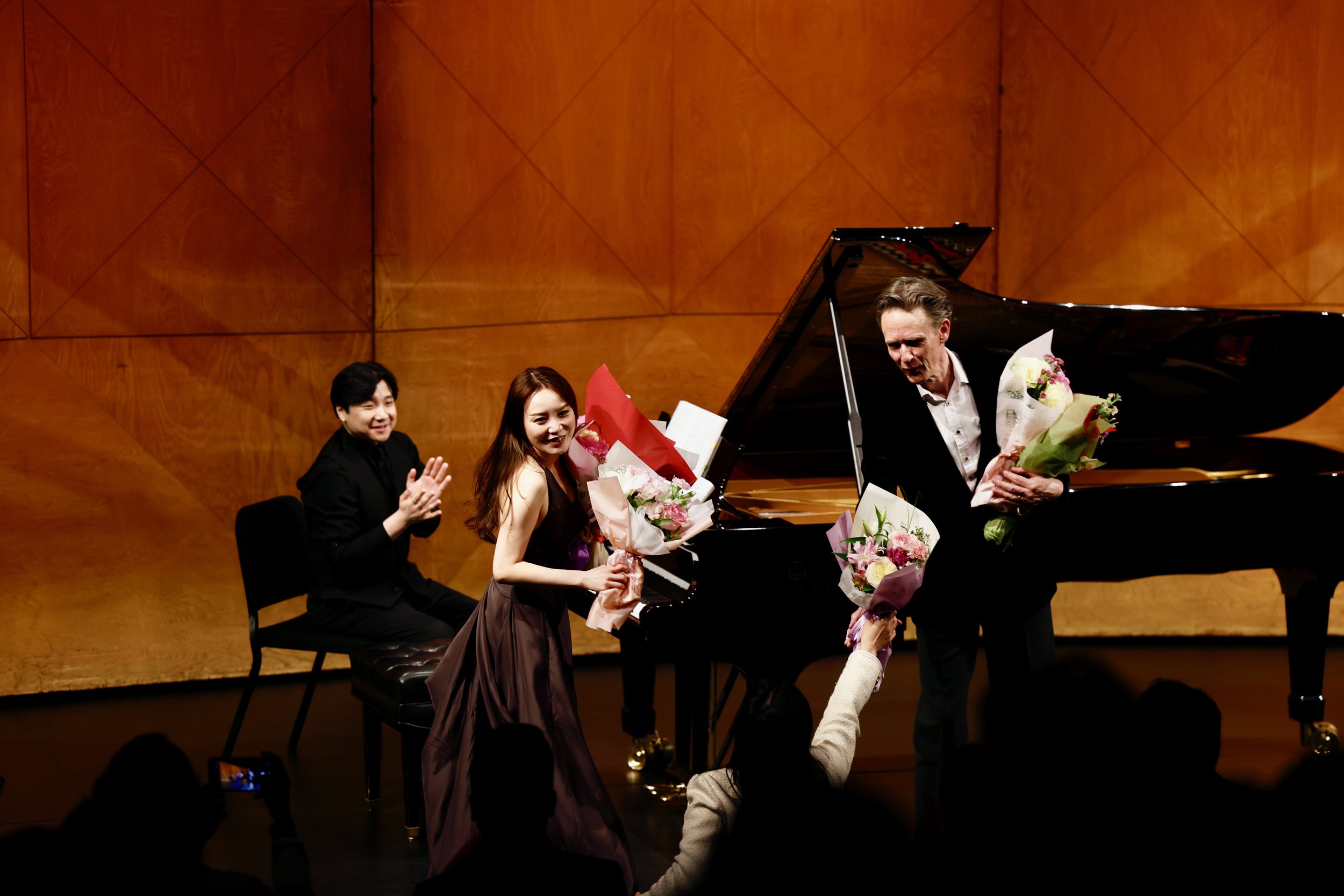
The performance of Benjamin Britten’s Holy Sonnets of John Donne was even more special, commanding in both architecture and in emotional gravitas. Written in 1945 after a visit to the liberated Nazi Bergen-Belsen concentration camp with Yehudi Menuhin, there can hardly be a more concentrated plunge into darkness than this performance of Britten’s setting. The current interpretation seems more rigorous than when Bostridge first recorded the cycle in 1995, possibly because the voice has somewhat less freedom on top, revealing a more skeletal thrust in the middle. The singer’s aim to distill the text with cinematic clarity remains, as does the objective to sustain cohesive tension throughout.
Though I might have wished the opening piano chords to be sharper and more abrupt, Bostridge’s opening declamatory tone in ‘Oh my blacke Soule!’ was superb and the way he negotiated the music’s complexity through bending contours and a woven lyrical fabric set the darkest of spells. Du was excellent in articulating the crazed writing of ‘Batter my heart…’, and the singer’s ability to use swoops and slides to convey the instability and fragmentation therein was fully effective. It seemed grittier than before. The weeping lines of ‘O might those sighes and teares return againe’ were beautifully contoured and found an almost disembodied sense of isolation. One consistently noticed the singer’s swells in dynamics from pianissimo to mezzo-forte, and its striking soliloquy character. ‘What if this present were the world's last night?’ was heaven storming in the pungency of its inward agony and philosophical reach.
The ‘redemption’ begins with ‘Since she whom I lov'd hath pay'd her last debt’, turning the corner on the work, becoming more humane and infinitely sensitive but with a heroic determination mixed in. Here we found wonderful suspension of line, though the stillness of the piece might be regarded as a ‘burning’ quiet. ‘At the round earth's imagined corners’ had a strong nobility to it, summoning all souls across history, while ‘Thou hast made me, and shall thy work decay?’ very effectively returns us to the desperate, chaotic feelings of ‘Batter my heart…’. For Bostridge, we never quite leave the early terror and the closing ‘Death be not proud’, beautifully concentrated as it was, still left me with more doubt than affirmation at the end.
The performance was a remarkable accomplishment with great cumulative strength, and we must particularly acknowledge Wenwen Du for her sensitive rendering of the difficult piano part. Some might find the traversal too unremittingly intense and over-detailed, but this is a standard criticism of the singer, and I don’t think it applies here. Nonetheless, it does remain a very serious, considered and dark approach to Donne’s text, and differs from the classic collaborations of Peter Pears and the composer, which still seem to be more ‘in the moment’, finding caprice, wit, and playfulness amidst the agony, and a full sense of relief and joy at the end. Where Pears exposes the human, erratic chaos of a sinner, Bostridge finds a chillingly pure existential dread. Of course, one can never forget the daring spontaneity of the composer’s own piano playing in this work.
A very happy homecoming indeed!
© Geoffrey Newman 2026