COMMANDING ARTISTRY FROM SIMON TRPCESKI, PETER OUNDJIAN AND THE VSO
Simon Trpčeski (piano), Vancouver Symphony Orchestra/ Peter Oundjian (conductor): Works by Tower, Rachmaninoff and Mussorgsky, Orpheum Theatre, May 17, 2026.
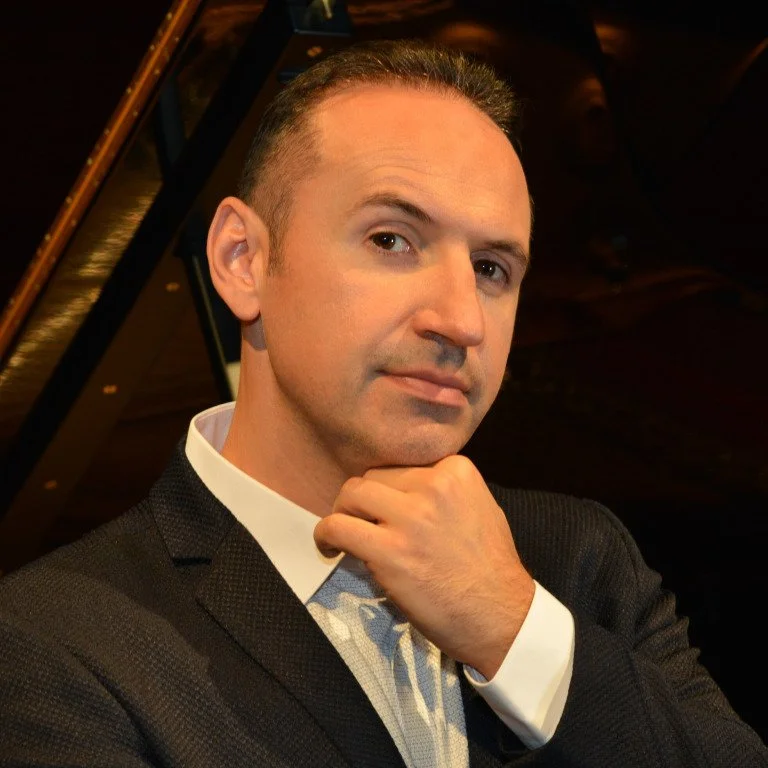
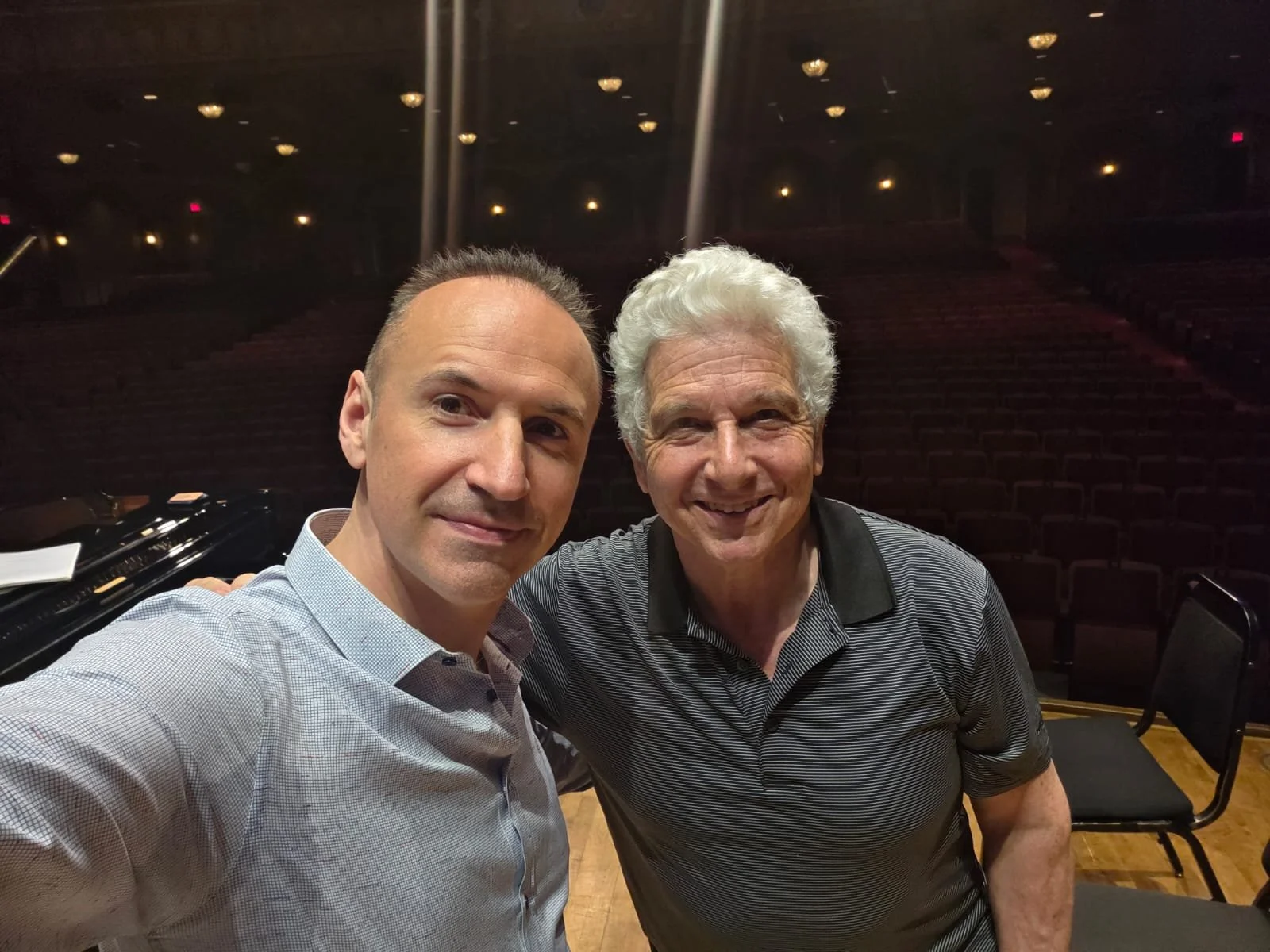
This concert featured a rather special collaboration between two distinguished musicians of long standing: Canadian conductor Peter Oundjian, now with the Colorado Symphony, but also Conductor Emeritus of the Toronto Symphony and the original leader of the Tokyo Quartet; and Macedonian pianist Simon Trpčeski, known for his beautifully contoured and emotionally penetrating performances all the way from his EMI debut recording of 25 years ago. The results were absolutely admirable. The maestro’s long association with American composer Joan Tower yielded an 11-minute reduction of her Concerto for Orchestra (1991) – full of compelling energy – followed by a treasurable collaboration with the pianist in Rachmaninoff’s Piano Concerto No. 1, and an imposing Mussorgsky Pictures at an Exhibition.
After all the diffuse contemporary ‘openers’ in fashion these days, it was refreshing to return to a tight, supremely crafted modern piece, full of American verve and discipline. In this ‘suite’ from Concerto for Orchestra – distilled from Joan Tower’s 30-minute original by the conductor – the essential concertante elements are preserved, as are the telling contrasts between work’s softer and more active postures. After a dark, atmospheric opening, Tower’s piece quickly springs to life. The highlights are the extended passages of motoric string rhythms and the complex and pugnacious role for the brass, all set within a modern symphonic idiom. Everything integrates superbly, and one noted the wonderful antiphonal brass effects, as well as many ‘soloistic’ moments.
For me, the work strongly recalled earlier American mid-century masters like Peter Mennin, whom I have always admired for his driving momentum and structural balance. The piece built quite stunningly under Oundjian’s direction and the orchestra did it proud: here was an opener which felt like we had really gone somewhere. For the dedicated listener looking for intrigue, the score even revealed a brass sequence akin to Mussorgsky’s Night on Bald Mountain – which foreshadows the Pictures at an Exhibition later in the concert – and a propulsive nod to Honegger’s famous Pacific 231.
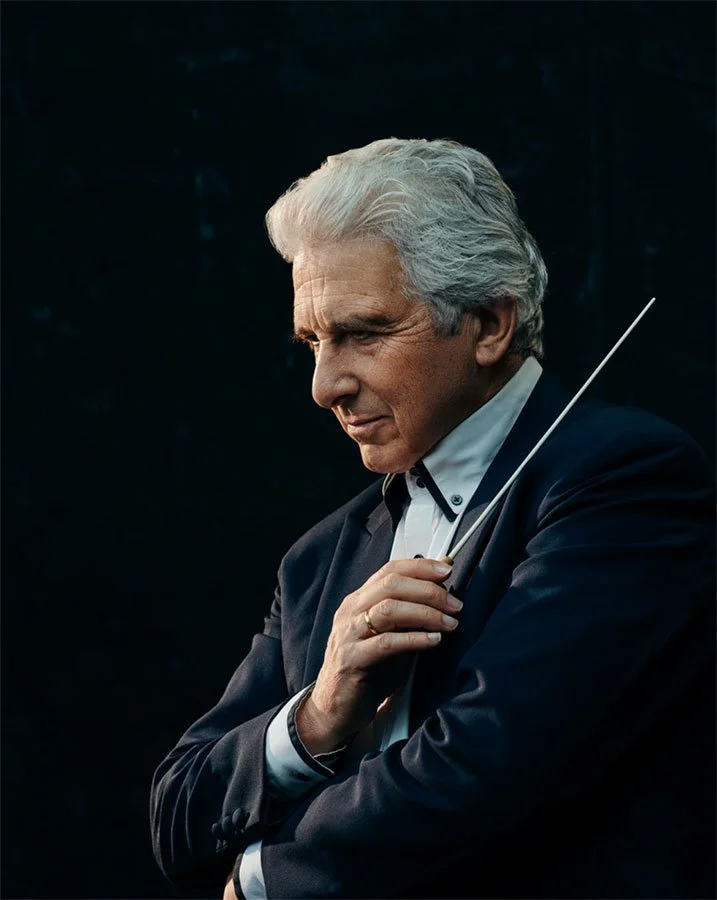
Simon Trpčeski appeared in Vancouver a number of times over a decade ago, and joined the VSO just last year in Liszt. The choice of Rachmaninoff Piano Concerto No. 1 this time was delightful, first, because we usually only hear the composer’s two subsequent concertos played by audacious young virtuosos, and, second, because we were able to witness a performance of great artistry rather than barnstorming power. Written when the composer was only 18, it is actually a challenge to make the piece fluent and communicative and not overblown. But Trpčeski succeeded in exactly that, placing a poetic, sparkling lyricism alongside scintillating bravura while isolating many moments of great beauty and feeling. Oundjian was with him every step of the way.
The opening movement developed so naturally: the pianist’s impassioned start was matched strongly by the orchestra, but then the expressive phrasing took over, at turns playful and witty, then melancholic, but always maintaining an ease and elegance. Rapid fire delivery could melt into the most beautiful lyrical postures almost instantaneously, then move to sparkling wit, and back again. The orchestral climax in the middle had wonderful majesty and shape, only to be followed by another flow of intimate communication. There was simply no sense of bloating in the work; feelings were generated through fully communicative phrasing and point, economical in many respects but with elemental power present when needed. Perhaps Trpčeski reminds me of Moiseiwitsch in his ease and Martino Tirimo in his tone and sense of line.
The Andante was possibly the highlight. Oundjian set the stage perfectly with wonderfully-firm lines to begin and eloquence to close. In between, the pianist opened out so much space and suspension that he could just sit and muse with the music’s beauty and melancholy. I’ve rarely heard anyone get more out of this movement emotionally and remain so pure in line and tone. The finale can be a problem: repetitive and heavy. But not here: Trpčeski’s variety, sparkle and subtle rhythmic nuance kept the development transparent and buoyant while the orchestra provided all the power one could ask for. Certainly, this reading of the concerto was the highlight of the evening, and one of the very best concerto performances of the year. Trpčeski’s touching encore enlisted concertmaster Nicholas Wright in a performance of ‘Simple Melody’ for Violin and Piano by the great Russian conductor Yevgeny Svetlanov.
The evening concluded with a rewarding performance of Mussorgsky’s Pictures at an Exhibition. Under Oundjian’s direction, the opening had a purposive gait, and the more powerful, heavy-hitting moments – such as ‘Gnomus’, ‘Bydlo’, and ‘Catacombs’ later on – featured magnificent string weight, structural cogency and precise brass discipline. However, the quieter sections, though effective, seemed more smoothly methodical than atmospheric. I missed some sense of fantasy. Possibly the winds needed to be more expressive – the saxophone in ‘The Old Castle’ might have hinted more at the exotic. The closing ‘Great Gate of Kiev’ is always spectacular, and it did not fail us here, with the added bonus that some of the entries of the bells and percussion actually sounded French rather than Slavic. While I have not noticed this with any regularity, one should not be surprised: Ravel, of course, was responsible for the original orchestration. Overall, I was impressed by the rich, strong contours and orchestral weight that Oundjian drew from the ensemble.
© Geoffrey Newman 2026