JAMES EHNES GIVES A MASTERLY BEETHOVEN VIOLIN CONCERTO FOR HIS 50TH BIRTHDAY
James Ehnes (violin), Krisztina Szabó (mezzo-soprano), Vancouver Symphony Orchestra/ Otto Tausk (conductor): Works by Sibelius, Beethoven, and Jeffrey Ryan, Orpheum Theatre, January 17, 2026.
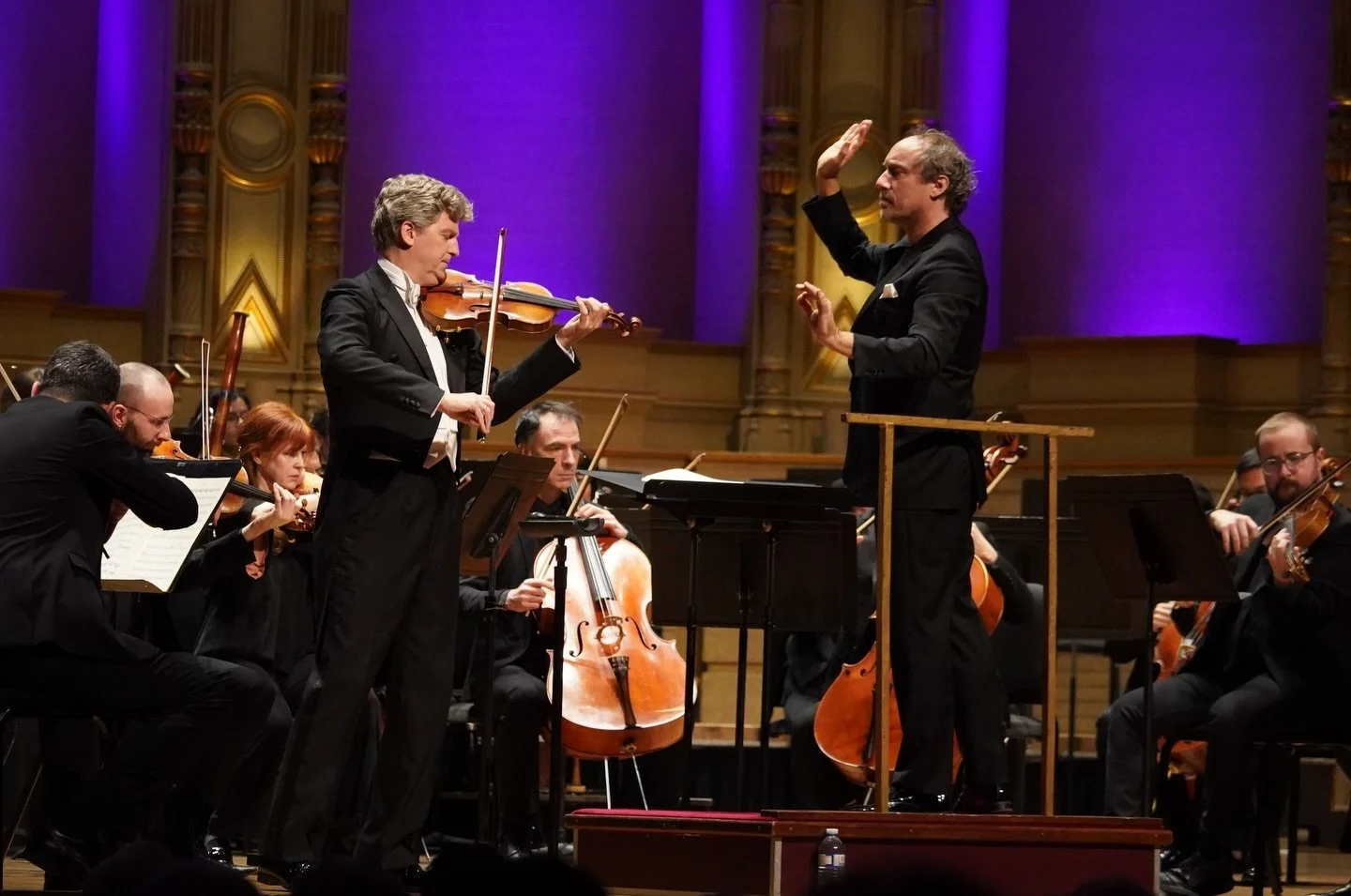
This concert celebrated James Ehnes’ 50th birthday and was a prelude to his extended Cross-Canada birthday tour that begins in May 2026. It also marked his 30th anniversary of performing with the Vancouver Symphony. The violinist brought the Beethoven concerto, the last of the ‘big’ concertos he recorded (2017), an interpretation that he has refined and perfected even more in the intervening years. The reading is a beautifully-sculpted mix of architecture and lyricism – a truly patrician reading – that increases its emotional absorption as the work progresses. Its companion was Jeffrey Ryan’s song cycle Miss Carr in Seven Scenes, a human, sensual and eminently touching piece now transcribed for orchestra, with mezzo Krisztina Szabó’s range and virtuosity equally transporting.
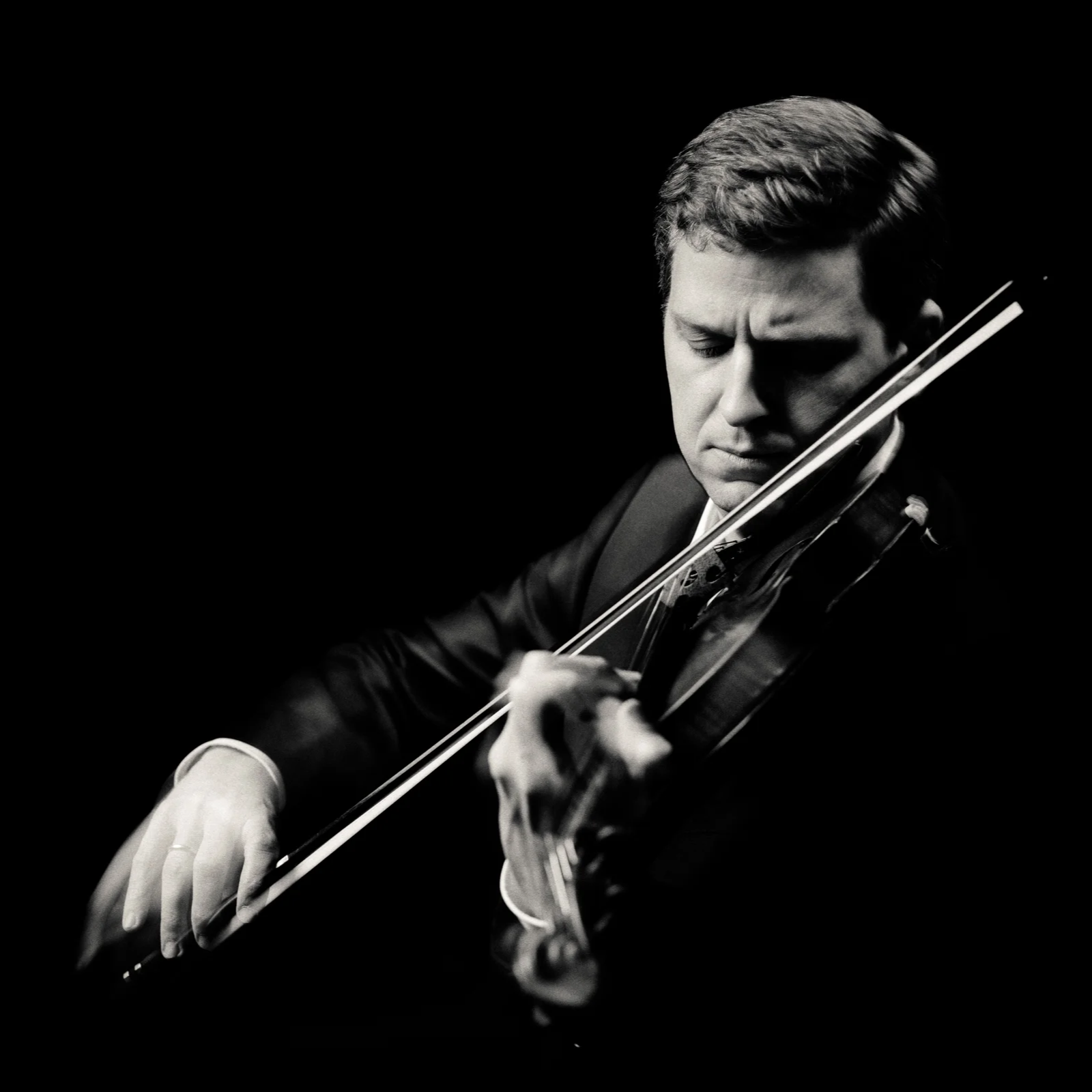
Ehnes’ opening movement of the Beethoven does not aim to be overly demonstrative, nor does it entertain an explicit narrative. It seeks instead to secure a cumulative strength through strong architecture set at the service of the piece’s lyrical undulations: increasing intensity and concentration moving up the hills but relaxing into a more peaceful repose in the valleys. This allows the violinist to open up space in the work when he needs to and, in particular, drop the music into a telling quiet where the work’s depth is often revealed. In doing so, he also isolates filagree textures and small dynamic variations within phrases that are revealing. The technical control and continuity achieved here were quite superb, with ‘spectacle’ limited to the Kreisler cadenza, which was formidable in its volatility and nuance and just kept on building. Otto Tausk was a creditable collaborator, though he seemed to be equivocal on whether he wanted the orchestral tuttis to be more militaristic or shaped. Nonetheless, I could do without his slight diminuendos before orchestral outbursts, or the extra romantic veneer placed over the quieter wind and string lines. The one miscalculation was in the quiet, uniquely-searching passage before the recapitulation: the horns were far too loud to preserve the music’s mystery.
Ehnes began the Larghetto in the light of day, but his magic was working into a quiet, celestial stillness as the movement progressed, very touching in its sense of beauty and intimacy, with true emotional vulnerability revealed in its closing minor key interludes. This was extraordinary playing from a technical perspective – remarkably pure and refined – and the orchestra collaborated well in this ‘chamber music’ approach. The brief cadential bridge to the finale gained added significance as the prelude to an ‘awakening’. The only question that might be raised is whether this approach takes a relatively robust middle period work of the composer too much toward his late quartets.
The finale moved like clockwork, the violinist resuming his ‘hills and valleys’ template of the opening movement, slowly but surely increasing intensity when moving up the hills, letting more of his passion show. Ehnes’ dynamic flexibility was impressive since he left room for moments of quiet playing to set alongside the increasing thrust and bounce. The integration with the orchestra was good. The cadenza was stunningly clean and certain of line, and the work ended with a lovely sense of freedom and joy. It was a wonderfully consistent and integrated journey all told, and fully memorable. From a technical perspective, I really can’t see the work being played any better and, while there have been many great performances of this concerto with more romantic flourish in the past, I think the relative refinement and precision of this reading is an almost perfect presentation for 21st century ears.
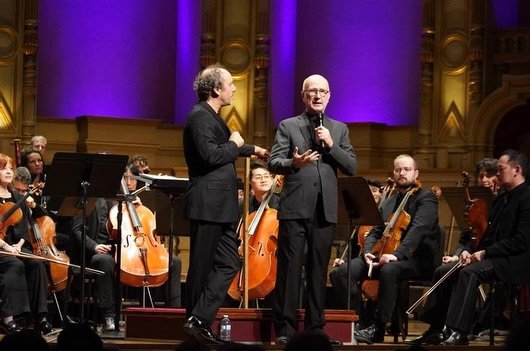
It was also a bit of a celebration for local composer Jeffrey Ryan, who was the VSO’s Composer-in-Residence from 2002 to 2007, and Composer Laureate for the 2008/09 season. His Miss Carr in Seven Scenes (2017) is a monodrama of seven songs, sung continuously, with texts selected from Emily Carr’s diaries that convey her early struggles as an artist and eventual success.It was premiered in March 2018 at Walter Hall, University of Toronto, with soprano Krisztina Szabó and pianist Steven Philcox, and released on the Canadian Music Centre CD Found Frozen. It is the new ‘orchestral’ version – commissioned by the VSO – premiered here, also with Szabó. Her singing remains at an exalted level, and the variety of the orchestral fabric seemingly adds both a pliability and a sensuality to the work’s character.
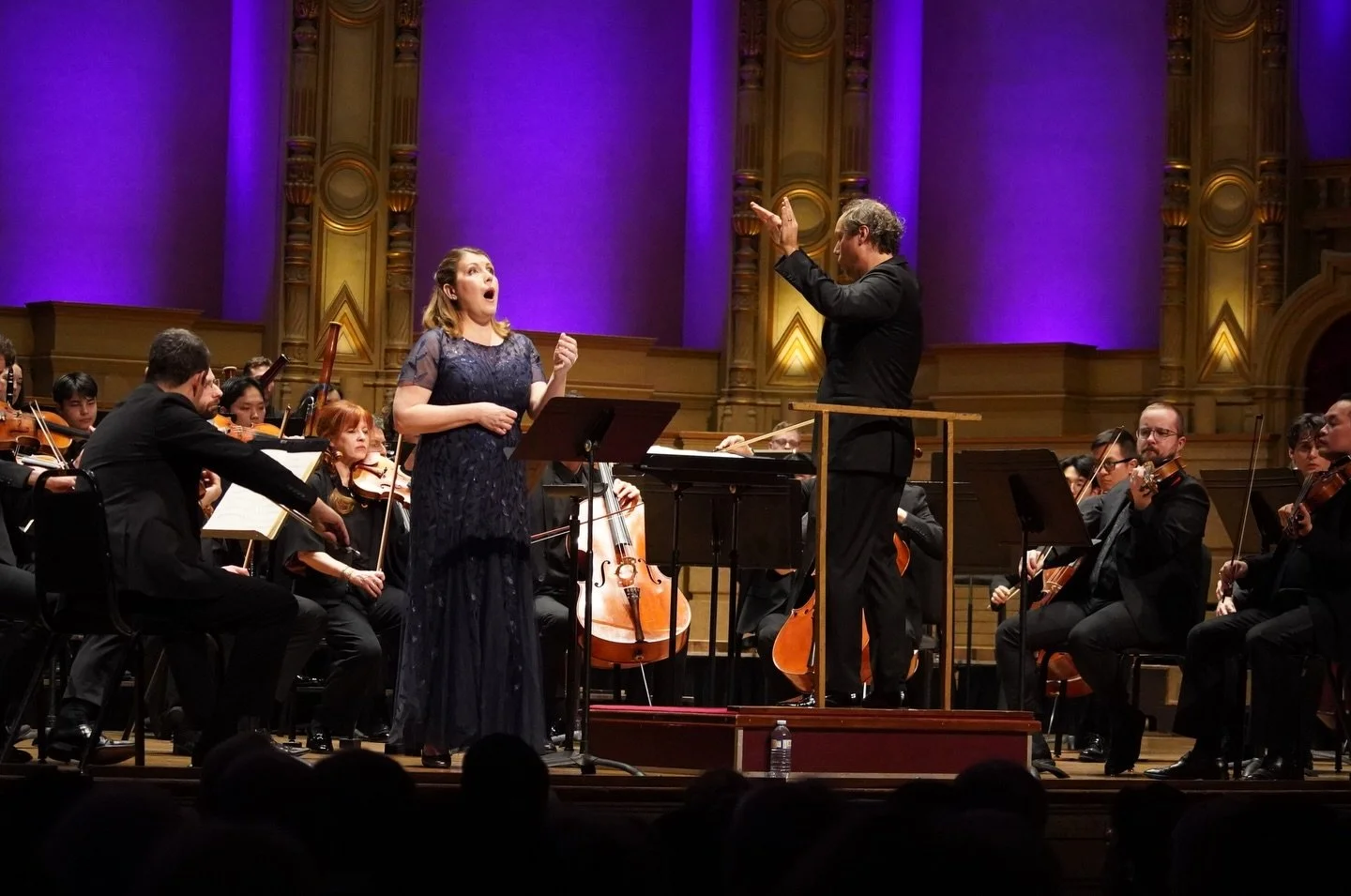
The work starts from the awe of nature in ‘Oh, These Mountains!’ and ‘A Glimpse of God’, bringing a broad and imposing orchestral response. Szabo’s lines were long and beautifully set, with lovely shadings and wondrous reach – almost Wagnerian in feel. Carr’s The Mountain (1933) is one of the painter’s most famous works, and serves to reinforce the basic theme: her career ascent is symbolically ‘climbing a mountain’. ‘Rhythm and Space’ introduces a more intimate fabric, with speech mixed with strongly etched vocal lines, and set over an enticing wind serenade. ‘Letters’ is entirely spoken, teasingly mixing ‘horrid’ and positive reviews. The ascent to acceptance begins with ‘A Movement Floating Up’ which is particularly searching, and carried by a wind motive suggesting a processional. ‘I’m Just Whizzy!’ celebrates her major sale of four pieces, and starts from passionately enunciated text, moving forward to a lovely resolution with the massed string ascent taking us to the special world of ‘Le Jardin Enchantée’ of Ravel’s Ma Mère L’oye.
Szabo found an enticing expressive warmth and lyrical radiance in the closing ‘Uncovered’ as well and, throughout, her absorption into the artist’s struggles and joys, and the sharpness of the techniques used to convey it, were consummate. Orchestral resources were used artfully throughout, with only occasional full orchestra punctuations and passages of driving energy, while the extensive contribution from the winds gave the work a softer and more endearing underlay. Much of the piece was a tapestry of colour and flow. I found it a renewing experience.
With Sibelius’ atmospheric The Swan of Tuonela as the opener, this was very rich and satisfying evening.
© Geoffrey Newman 2026
Photos courtesy of Vancouver Symphony Orchestra