STEFAN JACKIW AND JUN MÄRKL FIND RICHES IN PROKOFIEV AND BRAHMS
Stefan Jackiw (violin), Naomi Sato (shō), Vancouver Symphony Orchestra, Jun Märkl (conductor), Music of Takemitsu, Prokofiev, and Brahms, Orpheum Theatre, March 7, 2026.
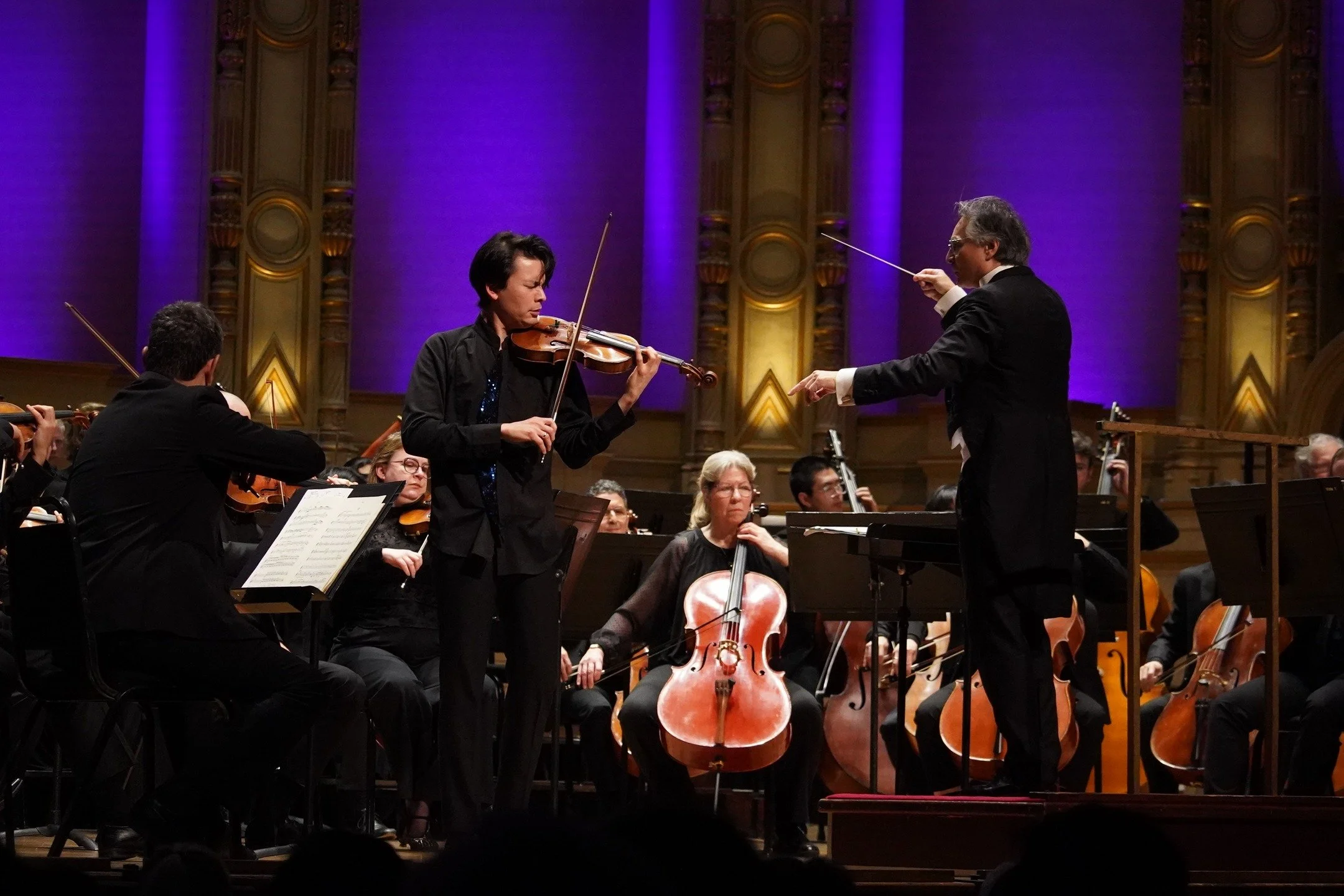
Violinist Stefan Jackiw and conductor Jun Märkl combined for a searching Mendelssohn Violin Concerto with the VSO a decade ago – opening out its poetry in a most enchanting way – and they were hardly less fine in Prokofiev’s Violin Concerto No.2 on this occasion. This was a darker and more mercurial Prokofiev, with a distilled lyricism and stunning virtuosity playing off the orchestra’s sharp contrasts and pugnacity. Throughout, Jackiw displayed his range, brilliance, and sheer magnetism in a way that we have now come to expect. Märkl’s reading of Brahms Symphony No. 1 was a fine nightcap: absolutely magnificent in architecture in the first two movements, but settling more for speed, drive and excitement in the last two. Overall, it left its mark. The concert opened with a late work of Tōru Takemitsu which featured the traditional Japanese shō.
Jackiw started the Prokofiev concerto off in an interesting way, its opening motif drawn very finely with limited vibrato, but also slinky and seductive. This soon gave rise to demonic drive, followed by playing of rarefied beauty, then strong determination and surge. The violinist demonstrated remarkable poise throughout, with his deeply felt appreciation of the work’s bittersweet lyricism and fantasy combining with an unerring nimbleness. The skittishness of the movement came through strongly, and perhaps the only problem was that the orchestra sometimes seemed too bulky to keep up, though the rawness of the composer’s sinister effects was clearly felt.
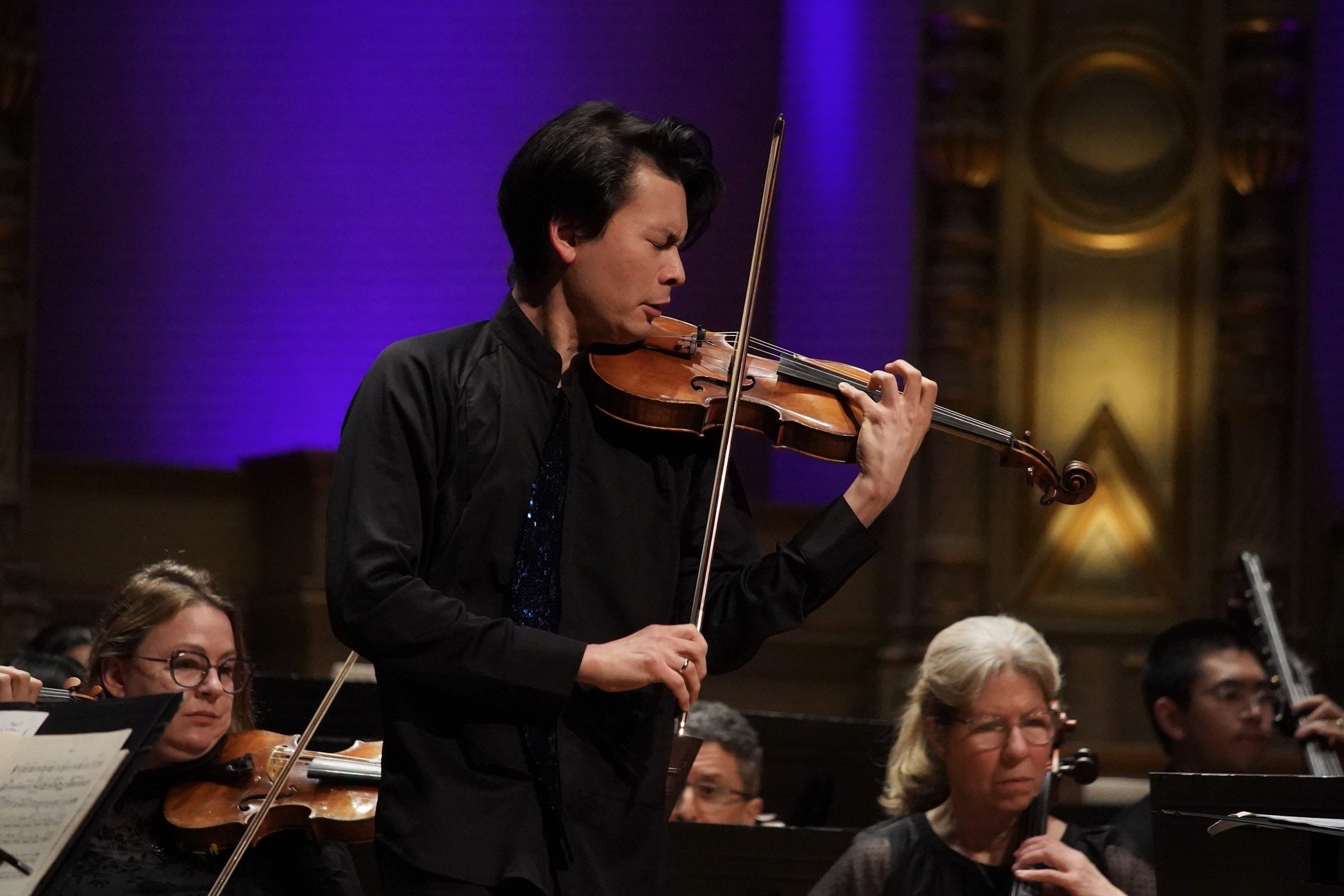
Integration was better in the subsequent movements. Jackiw suspended the opening cantilena theme of the second movement in a most lovely way while bringing a strong romantic ardour to the climaxes later on. In between, the violinist and orchestra exposed a myriad of subtle textures and colours while still maintaining strong continuity. The ‘Spanish’ finale, with its castanets, was as successful, with fine swagger and motion. Here the violinist’s virtuosity really came to the fore, as did his flexibility. There were lots of strong contrasts and motoric rhythms, which kept a demonic edge to the proceedings, and the conductor was at great pains to emphasize the composer’s exotic instrumental effects. The performance as a whole cast a very fine spell. Jackiw can sometimes overthink pieces, which can lead to self-consciousness, but I found little of that here. His portamenti and quick slides might have been a concern to some, but they fit with the virtuoso tradition of Jascha Heifetz, which is quite different than the structured richness of David Oistrakh.
The first two movements of Jun Märkl’s Brahms First Symphony were exceptional, establishing a lovely vertical reach and majesty. There was a Klemperer-like power right from the opening, and a wonderful sense of mystery to send off the main allegro. Rhythms were splendidly articulated yet the architecture and dynamics were absolutely sure, allowing both the quiet wind passages to suspend properly and the strings to push upward to achieve radiant romantic feeling. The movement had exactly the right type of inevitability. The Andante carried on the same patience and awareness, finding both tenderness and elegance at what seemed to be a perfect tempo. There was almost a regal quality hovering over its lyrical development.
Unfortunately, the interpretation was not sustained. The easeful Allegretto was marginally too quick, losing its fragrance and making its later parts too frenetic, while the finale, which logically should mirror the style of the opening movement, tended to horizontal push rather than vertical expansion. Overall, the finale was too quick and driving, and did not have the patient, settled architecture established earlier. The counterpoint was indeed strong, and it was very exciting at the end, but the poise and lyrical contrast needed to generate a full symphonic arc were missing: the conductor always seemed to be in a slight hurry. Nonetheless, hearing the first two movements was well worth the price of admission: we seldom see conducting as fine as that!
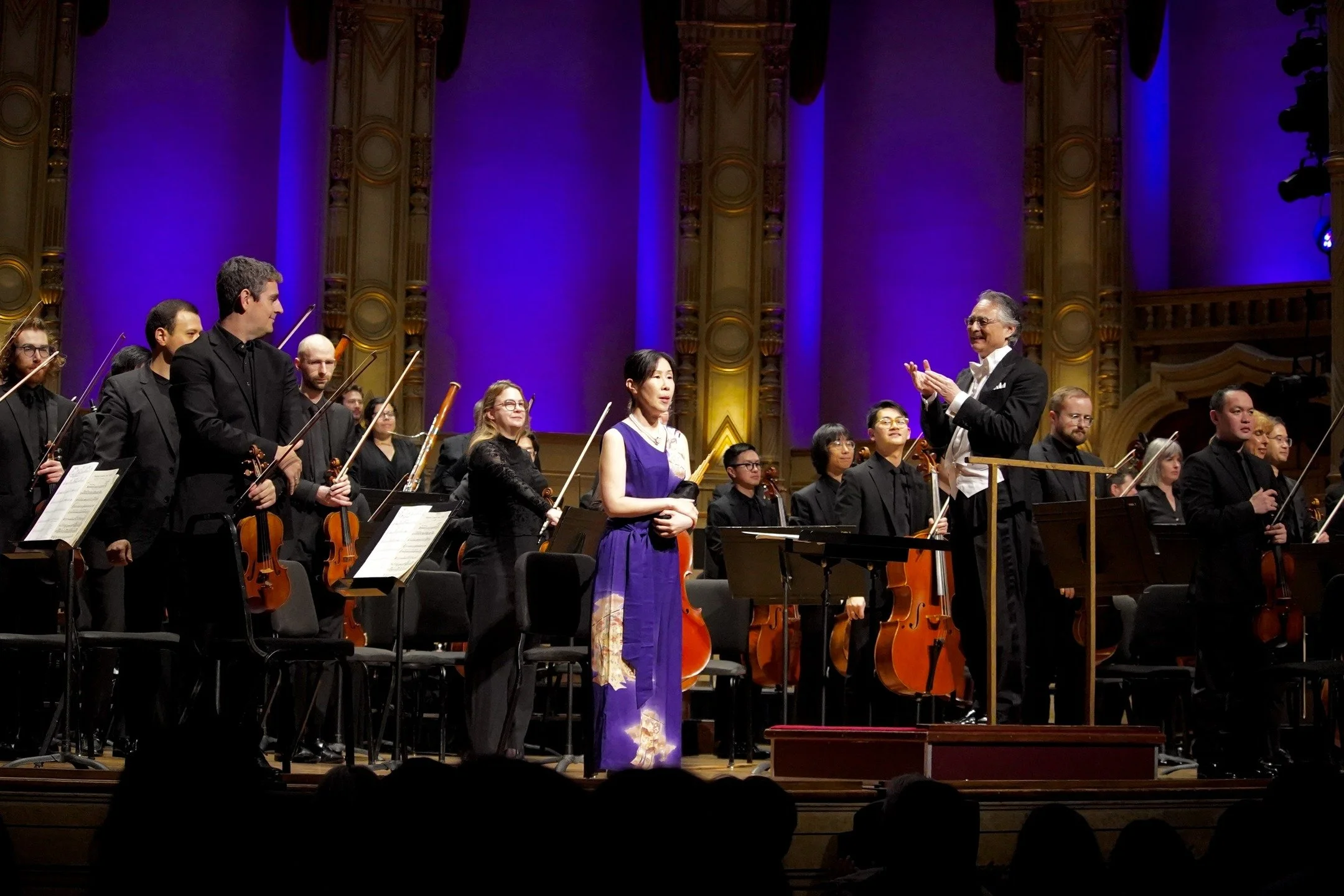
Given his Japanese heritage, Märkl often brings a Tōru Takemitsu piece to open a concert. This time it was Ceremonial – An Autumn Ode, a late piece commissioned by Seiji Ozawa in 1992. One intrigue was that it featured the historical shō playing at the work’s beginning and end, an instrument that serves as the traditional Japanese mouth-organ and which migrated from China to Japan many thousands of years ago. It is derived from the Chinese sheng. Naomi Sato played it with mastery, blowing through a mouthpiece that activates the reeds in a cup-shaped chamber held between the hands. The conductor joked about how tightly Sato holds the chamber, noting that it was not only because she loves the instrument to death, but also that it requires the hand warmth to play properly.
There could hardly be more refined and pure sounds than those that Sato coaxed out of the instrument. The playing was both expert and lovely, perhaps suggesting the quiet mystery and melancholy of fall. However, what comes right after is almost the opposite – lush and dramatic orchestral swells coupled with modernist brass slides at strong volumes. While this exposition did suggest moments of yearning and Debussy-like wonder, I admit I found the juxtaposition of the two worlds difficult to integrate, since one might expect the orchestra to build slowly from the shō’s innocent first statements and, then, to gradually die down again to the instrument’s quiet final soliloquy. This transition was not present. Clearly, the expressive late Takemitsu is quite different than the more refined early Takemitsu.
In any event, this was very fulfilling concert which did the performers proud.
© Geoffrey Newman 2026
All photos courtesy of Vancouver Symphony Orchestra